
Super-Eddington Black Hole Growth Explained Simply
Understanding super-eddington black hole growth explained has become one of the most exciting topics in modern astronomy. Recently, astronomers discovered a distant quasar known as ID830 that appears to be growing much faster than traditional physics models predicted.
Normally, black holes grow at a limited speed controlled by a physical rule called the Eddington Limit. However, observations of ID830 suggest that it is consuming matter around 13 times faster than this limit. This surprising discovery is forcing scientists to rethink how black holes evolved in the early universe.
In this article, we will explore what astronomers observed, why this discovery matters, and how it could reshape our understanding of supermassive black hole formation and the evolution of galaxies.
What Is a Quasar?
To understand this discovery, we first need to know what a quasar is.
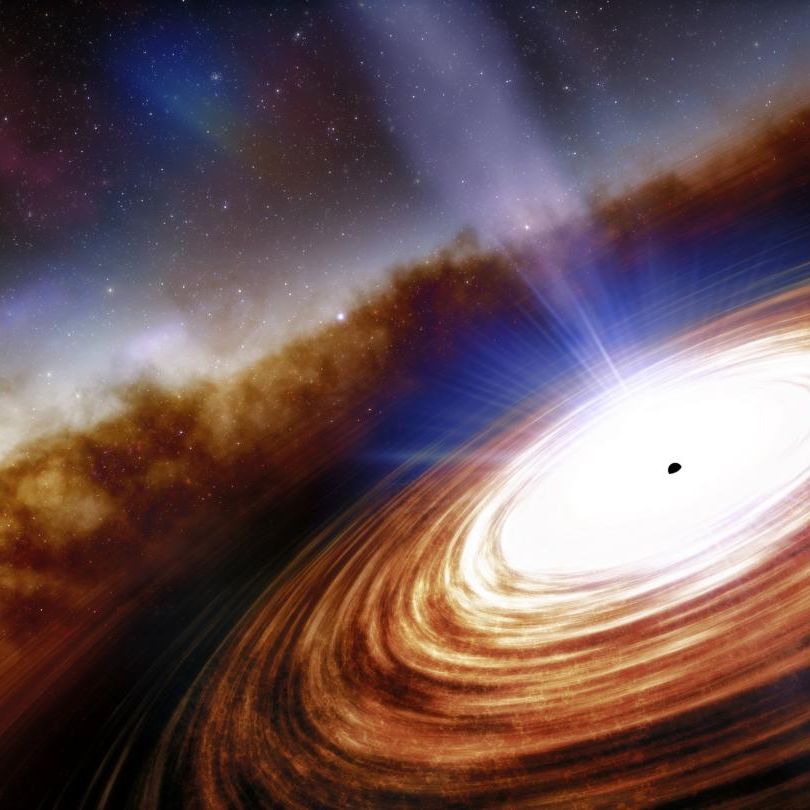
A quasar is an extremely bright object powered by a supermassive black hole located at the center of a galaxy. When huge amounts of gas and dust fall toward the black hole, they form a spinning disk called an accretion disk. As this material heats up due to friction and gravity, it releases enormous amounts of energy.
Because of this intense energy, quasars can shine brighter than entire galaxies and can be observed even from billions of light-years away.
This makes them valuable tools for studying ancient cosmic events and understanding the early universe black hole formation process.
The Mystery of Quasar ID830
Astronomers recently identified a distant quasar called ID830, which existed when the universe was still very young.
What makes this object special is its extraordinary growth rate.
Using ultraviolet and X-ray observations, scientists found that the black hole powering ID830 appears to be consuming matter at around 13 times the Eddington limit. This kind of growth is known as super-Eddington accretion.
Such rapid feeding phases are thought to exist, but they are usually considered rare and short-lived, especially for already massive black holes.
Understanding the Eddington Limit
What Is the Eddington Limit?
The Eddington Limit is a theoretical boundary that describes how fast a black hole can grow.
When matter falls into a black hole, it releases energy in the form of radiation. This radiation pushes outward, creating pressure that opposes gravity.
At a certain point:
- Gravity pulls matter inward.
- Radiation pushes matter outward.
When these forces balance, the black hole reaches the Eddington limit.
Under normal conditions, this limit prevents a black hole from consuming material faster.
How ID830 Appears to Break This Limit
The discovery of ID830 suggests that black holes can sometimes temporarily exceed this limit.
Scientists believe this may happen due to a sudden influx of material. Possible explanations include:
- A massive star being torn apart by the black hole
- A dense cloud of gas falling into the black hole
- A merger or disturbance inside the host galaxy
These events can create short bursts of intense feeding, allowing black holes to grow extremely quickly for a brief period.
This phenomenon helps explain how supermassive black holes grow fast during the early history of the universe.
Powerful Jets and X-Ray Emissions
Another fascinating aspect of ID830 is that it is not just growing rapidly.
It is also producing:
- Powerful radio jets
- Strong X-ray emissions
Radio Jets
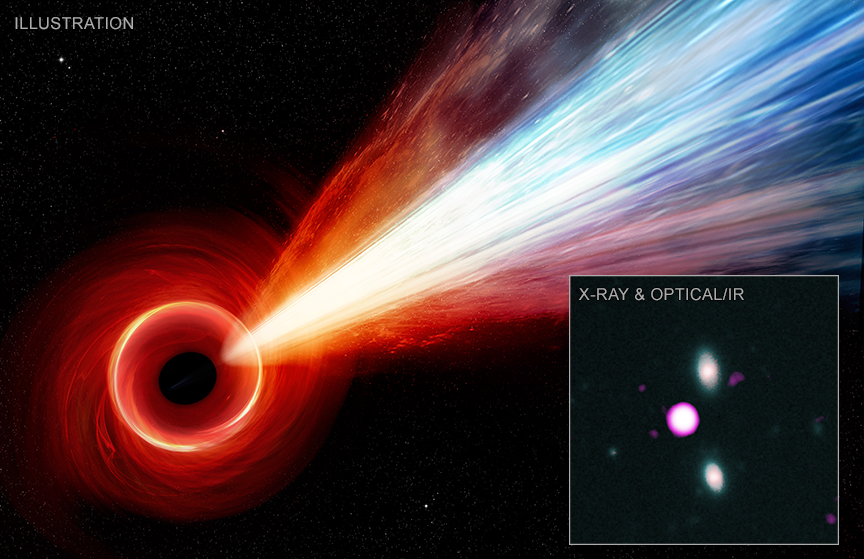
Radio jets are streams of charged particles that shoot out from near the black hole’s poles at extremely high speeds.
These jets can travel across vast distances in space and influence surrounding galaxies.
X-Ray Corona
The X-ray corona is a super-hot region above the accretion disk that emits powerful X-ray radiation.
Under normal conditions, extremely high feeding rates should disrupt the magnetic fields needed to produce strong jets. However, ID830 appears to support both intense feeding and powerful jets simultaneously.
This is why the discovery is attracting significant attention from astrophysicists.
Why This Discovery Matters
The observation of ID830 could help solve a major puzzle in astronomy.
Scientists have discovered black holes with masses billions of times greater than the Sun existing less than one billion years after the Big Bang.
According to traditional models, it should take much longer for black holes to grow that large.
However, super-Eddington growth phases may allow black holes to gain mass rapidly through short bursts of intense accretion.
This idea suggests that early black holes may have grown through powerful growth surges instead of slow steady feeding.
How Black Holes Shape Galaxies
Supermassive black holes are closely linked to the evolution of galaxies.
As black holes consume matter, they release enormous energy through radiation and jets. This energy can affect the surrounding gas in several ways:
- Heating nearby gas
- Pushing gas away from the galaxy center
- Slowing down star formation
This process is called black hole feedback.
If super-Eddington growth phases were common in the early universe, black holes may have grown rapidly while also regulating the growth of their host galaxies.
What Scientists Will Study Next
Researchers are now trying to determine whether ID830 is unique or part of a larger population of similar objects.
Future observations will use:
- Advanced X-ray telescopes
- Powerful radio observatories
- Deep infrared surveys
These tools will help scientists better understand:
- Accretion disk behavior
- Magnetic field stability
- Jet formation mechanisms
- Early galaxy evolution
Improved computer simulations will also explore how super-Eddington accretion works under extreme conditions.
Comparison Table
| Feature | Normal Black Hole Growth | ID830 Observation |
|---|---|---|
| Growth Rate | Near Eddington limit | 13× faster |
| Accretion Mode | Stable feeding | Extreme burst feeding |
| Jet Activity | Often weaker | Strong radio jets |
| Radiation | Balanced pressure | Intense X-ray emissions |
| Scientific Impact | Standard models | Challenges existing models |
. Quasar Visualization

2. Black Hole Accretion Disk
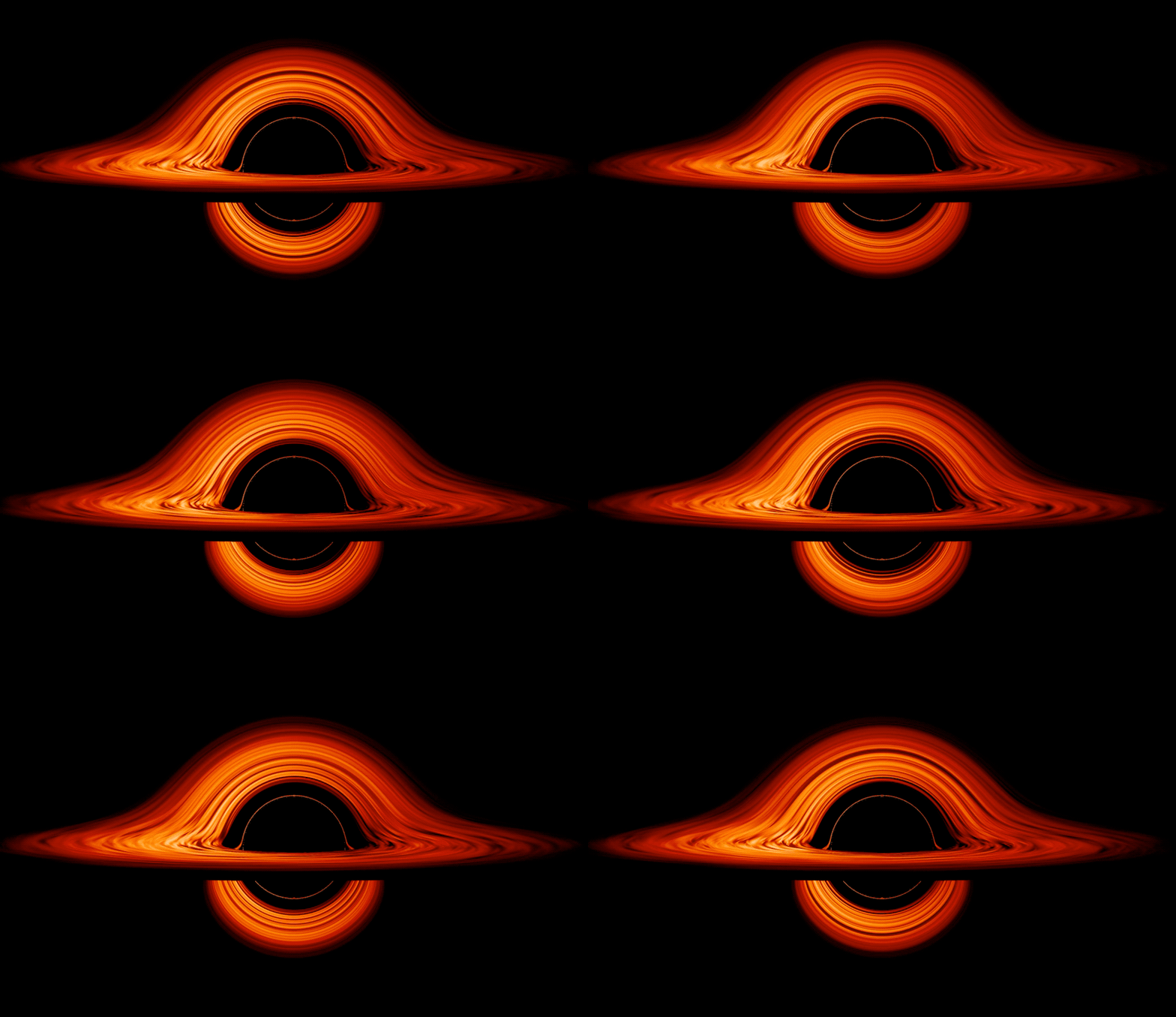
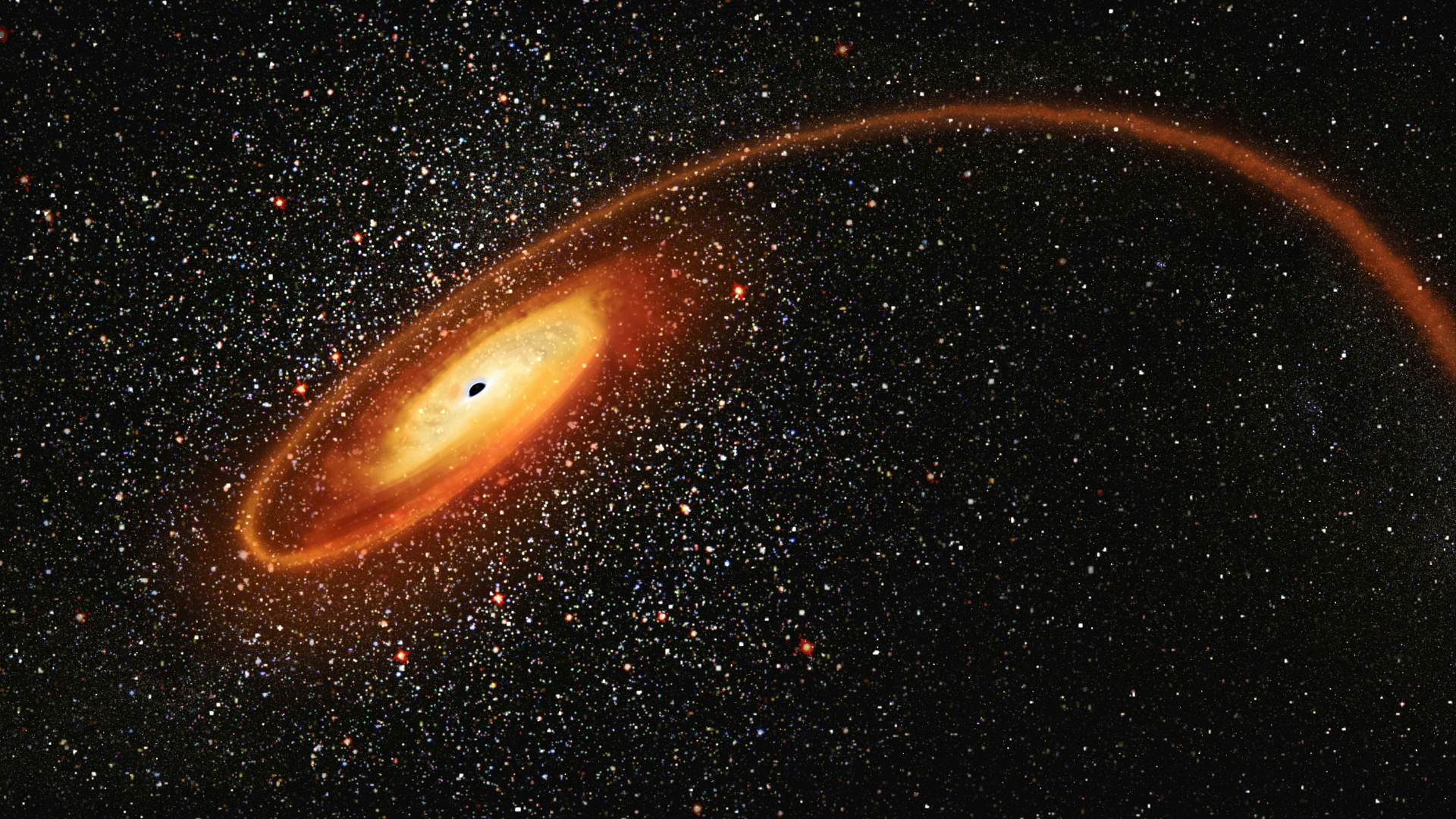

(Images represent NASA-style educational visualizations and can be replaced with royalty-free versions from sources like Unsplash, NASA Image Library, or ESA.)
Conclusion
The discovery of quasar ID830 offers a fascinating glimpse into the extreme conditions of the early universe. By showing evidence of super-Eddington accretion, it suggests that supermassive black holes may have grown far faster than scientists once believed.
Rather than breaking the laws of physics, this discovery encourages researchers to refine their models of black hole growth, magnetic fields, and galaxy evolution.
As new telescopes and observations reveal more objects like ID830, our understanding of the universe’s earliest and most powerful phenomena will continue to expand.
The cosmos still holds many mysteries, and discoveries like this remind us that the universe is far more dynamic and surprising than we ever imagined.