
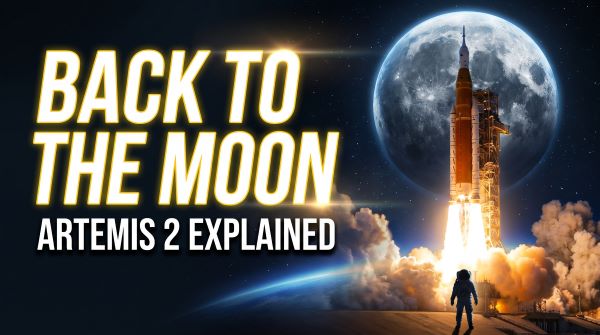
Artemis 2 Mission Explained for Beginners
The Artemis 2 mission explained for beginners is one of the most exciting topics in modern space exploration. After more than 50 years since humans last traveled to the Moon, NASA is preparing to send astronauts back into deep space. You can explore full mission details on the NASA Artemis II official page.
This mission is not just about revisiting the Moon—it’s about building a future where humans can live and work beyond Earth. If you’ve ever wondered how space missions work or what comes next after the Apollo era, this guide will help you understand everything in simple terms.
Artemis 2 mission explained for beginners
🌌 What Is the Artemis Program?
The Artemis Program is NASA’s long-term plan to return humans to the Moon and eventually reach Mars. It is named after Artemis, the twin sister of Apollo in Greek mythology.
Key Goals of the Artemis Program:
- Return humans to the Moon
- Land the first woman and person of color on the Moon
- Build sustainable lunar exploration systems
- Prepare for future missions to Mars
The mission sequence includes:
- Artemis I – Uncrewed test flight
- Artemis II – First crewed mission around the Moon
- Artemis III – Planned Moon landing
🧑🚀 Artemis 2 Mission Explained for Beginners
The Artemis 2 mission explained for beginners focuses on NASA’s first crewed lunar mission in decades.
Unlike Artemis I, which was a test without astronauts, Artemis II will carry four astronauts on a journey around the Moon.
What Makes Artemis 2 Special?
- First crewed deep space mission since Apollo
- Astronauts will travel farther than ever before
- Tests critical systems for human survival in space
- Prepares for future Moon landings
This mission is a test flight with humans onboard, making it a crucial step toward long-term space exploration.
🚀 The Technology Behind Artemis 2
🛰️ Orion Spacecraft


The Orion spacecraft is the spacecraft that will carry astronauts.
Key Features:
- Advanced life support systems
- Heat shield for safe re-entry
- Navigation and control systems
- Comfortable crew module
It acts like a mini-Earth in space, providing everything astronauts need to survive.
🚀 Space Launch System (SLS)


The Space Launch System is the most powerful rocket ever built by NASA.
Key Facts:
- Produces 8.8 million pounds of thrust
- Taller than the Statue of Liberty
- Designed for deep space missions
This rocket will launch the Orion spacecraft from Kennedy Space Center.
🌍 Step-by-Step: How Artemis 2 Works
Understanding how Artemis 2 works step by step is easier than you think.
1. Launch Phase
- Rocket lifts off from Earth
- Boosters fire for about 2 minutes
- Core stage continues flight
2. Earth Orbit
- Spacecraft enters orbit
- Systems are tested
- Crew prepares for next stage
3. Translunar Injection
- Engine burn sends spacecraft toward the Moon
- Begins deep space journey
4. Lunar Flyby
- Spacecraft travels around the Moon
- Astronauts observe the far side
5. Return Journey
- Spacecraft heads back to Earth
- Systems checked again
6. Re-entry & Splashdown
- Capsule re-enters atmosphere
- Heat shield protects crew
- Lands safely in the ocean
🔬 What Will Artemis 2 Test?
The NASA Artemis 2 crewed mission details include several important tests.
🧪 Major Objectives:
- Life support system performance
- Human survival in deep space
- Navigation and communication systems
- Manual spacecraft control
🧑🚀 Human Testing:
- Effects of radiation
- Microgravity impact on body
- Psychological adaptation
🌕 Why Returning to the Moon Matters
The return to the Moon NASA plan is not just about exploration—it’s about preparation.
🌟 Key Reasons:
- Learn to live outside Earth
- Use Moon resources like water ice
- Test technologies for Mars
- Build lunar bases
The Moon will act as a training ground for Mars missions.
🔥 Challenges of Artemis 2
Space missions are never easy. Artemis 2 faces several challenges:
⚠️ Major Risks:
- Extreme temperatures
- Radiation exposure
- High-speed re-entry
- System failures
NASA carefully tests everything multiple times to ensure astronaut safety.
🌌 Artemis 2 vs Apollo Missions
| Feature | Apollo Missions | Artemis 2 |
|---|---|---|
| Time Period | 1960s–1970s | Modern era |
| Technology | Basic computers | Advanced AI systems |
| Mission Type | Landing missions | Flyby test mission |
| Duration | Short | Longer & complex |
| Goal | Reach Moon | Prepare for future |
🌍 The Future After Artemis 2
After Artemis 2, the next big step is Artemis III.
🚀 What’s Next?
- Human landing on the Moon
- Building lunar bases
- Preparing Mars missions
The ultimate goal is to make humans a multi-planetary species.
🌟 Conclusion
The Artemis 2 mission explained for beginners shows us that humanity is once again ready to explore beyond Earth.
This mission is not just about science—it’s about curiosity, courage, and the future of our species.
From testing life support systems to traveling around the Moon, Artemis 2 is a critical step toward Mars and beyond.
👉 The journey has just begun. Are you ready to explore the future?
More Read :