
Saturn Rings Disappearing: Cassini Discoveries
🌌 Saturn Rings Disappearing: The Shocking Truth Revealed
The idea of Saturn rings disappearing may sound unbelievable, but scientists now confirm it’s happening. 🪐 Saturn’s beautiful rings are not permanent — and we are lucky to see them today.
In this beginner-friendly guide, we’ll explore how Saturn’s rings formed, why they are fading away, what NASA’s Cassini mission discovered, and the deeper mysteries hiding inside this gas giant.
🌟 Introduction: Why Saturn Fascinates Us
Saturn has always been known as the most beautiful planet in our solar system. Its bright golden color and wide ring system make it unique.
But behind that beauty lies a dramatic story of destruction, storms, disappearing rings, and groundbreaking discoveries from the Cassini–Huygens mission.
Scientists now believe Saturn’s rings are relatively young and slowly vanishing. Understanding this helps us learn more about planetary evolution and the future of our solar system.
🪐 How Did Saturn’s Rings Form?


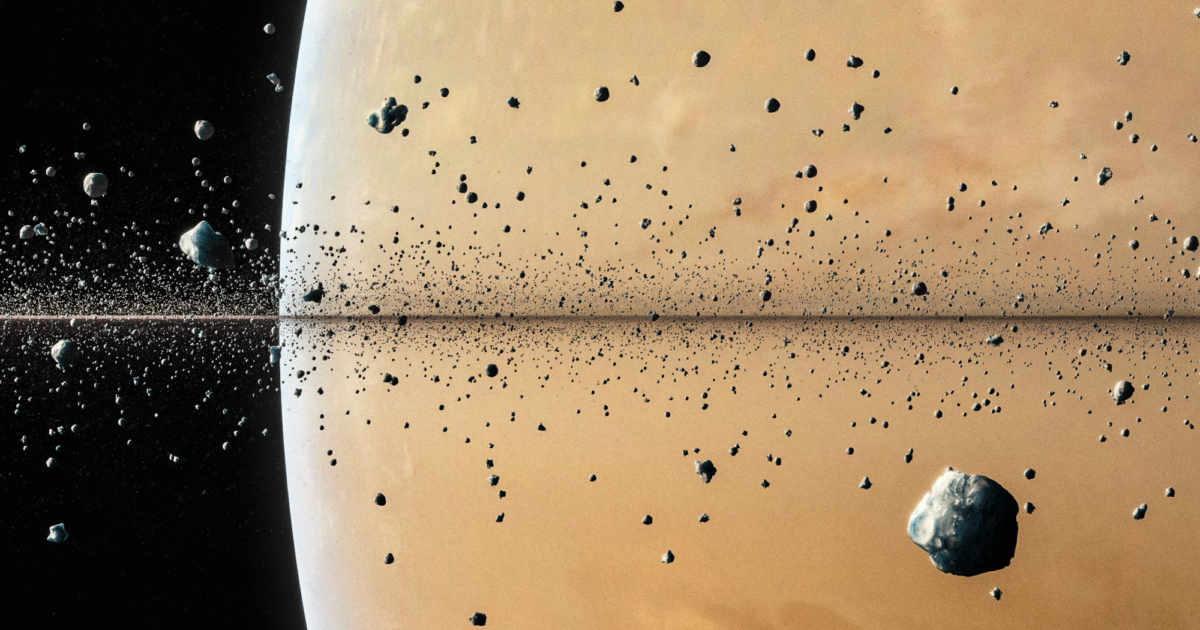
For a long time, astronomers debated how Saturn’s rings formed. The leading theory suggests that:
- Saturn once had an icy moon orbiting too close.
- The moon crossed the Roche limit.
- Saturn’s gravity tore the moon apart.
- The debris spread into orbit and formed the rings.
This event may have happened around 100 million years ago, which is young in cosmic terms.
What Is the Roche Limit?
The Roche limit is the distance at which a planet’s gravity becomes stronger than the gravity holding a moon together.
When that invisible boundary is crossed, the smaller body breaks apart.
📏 Saturn’s Rings: Size and Structure
Saturn’s rings are:
- 280,000 km wide
- Only about 10 meters thick
- Made of ice and rock pieces
- Particles range from tiny dust to large boulders
Despite their massive width, they are incredibly thin. If viewed from the side, they would almost disappear.
⏳ Why Are Saturn’s Rings Disappearing?


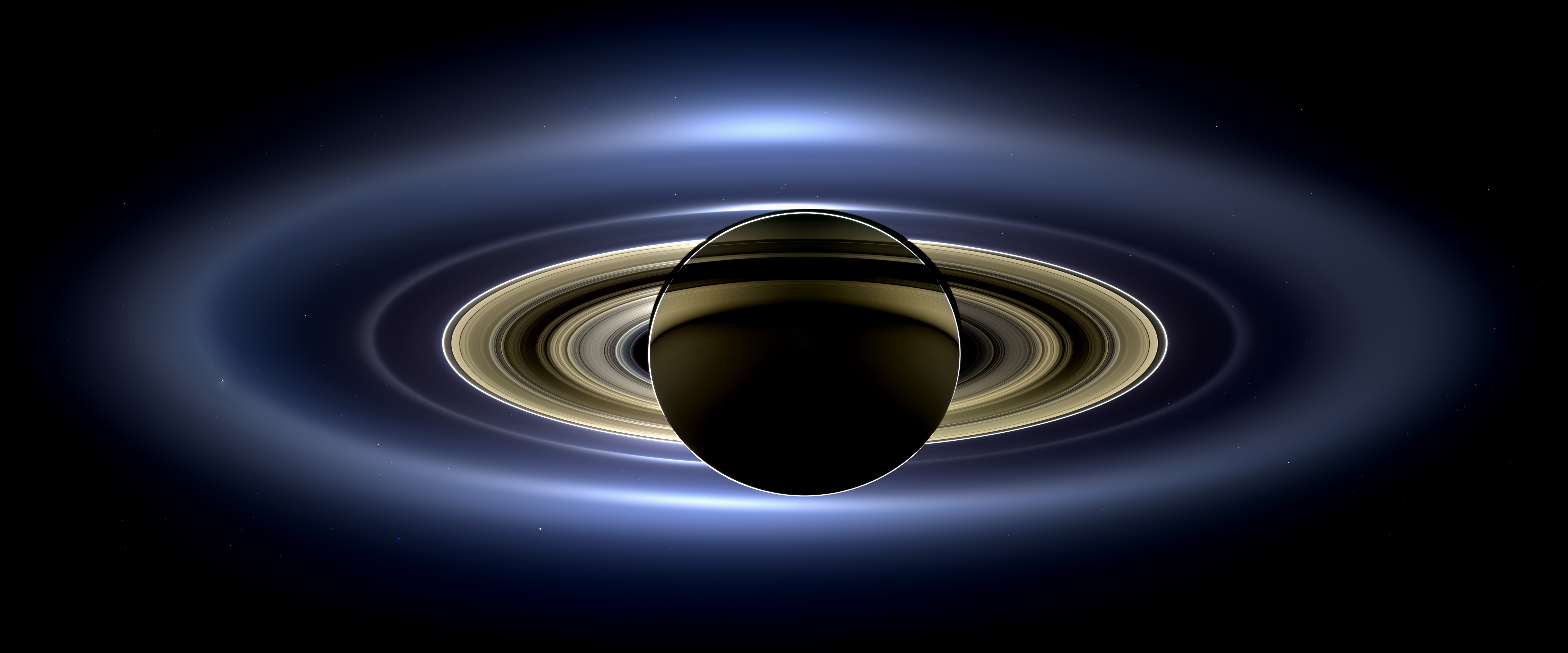
Now comes the surprising part: Saturn rings disappearing is not a theory — it’s a measured process.
Scientists discovered a phenomenon called “ring rain.” This is when ring particles slowly fall into Saturn due to gravity and magnetic forces.
Main Reasons Rings Are Fading:
- Saturn’s gravity pulls particles inward.
- Solar radiation weakens ring structure.
- Small moons collect debris.
- Collisions break particles into dust.
At this rate, Saturn could lose its rings in 100–300 million years.
We are living in the perfect time to see them.
🚀 Cassini Mission Discoveries About Saturn
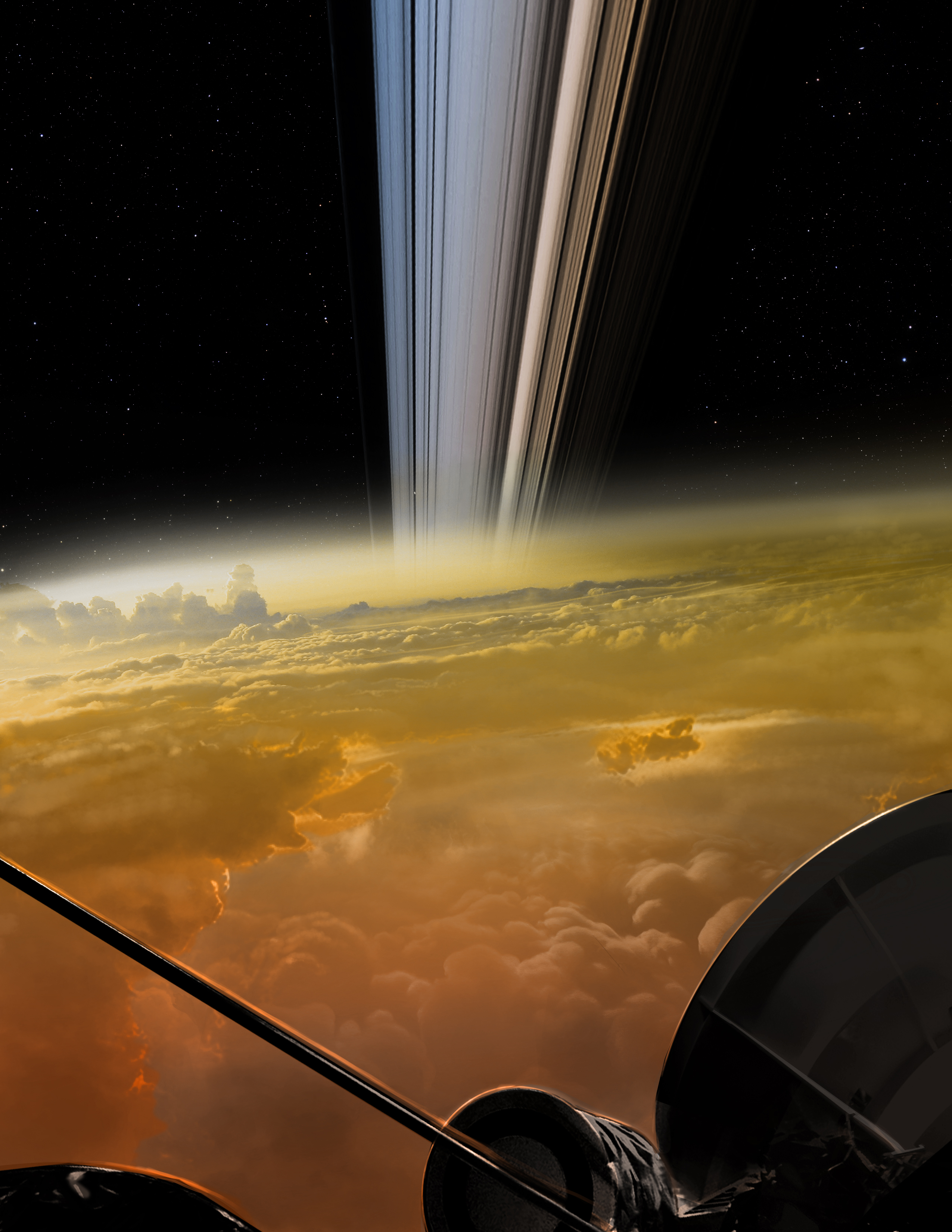


The Cassini–Huygens mission transformed our understanding of Saturn.
Launched in 1997, it reached Saturn in 2004 and studied the planet for 13 years.
Cassini Revealed:
- The rings are much younger than expected.
- Saturn’s atmosphere has powerful wind speeds up to 1,800 km/h.
- A massive hexagon-shaped storm exists at the north pole.
- Saturn’s moon Enceladus has water geysers.
In 2017, Cassini performed its “Grand Finale,” diving into Saturn’s atmosphere to collect final data before being destroyed.
❄️ Enceladus: The Moon That Creates a Ring


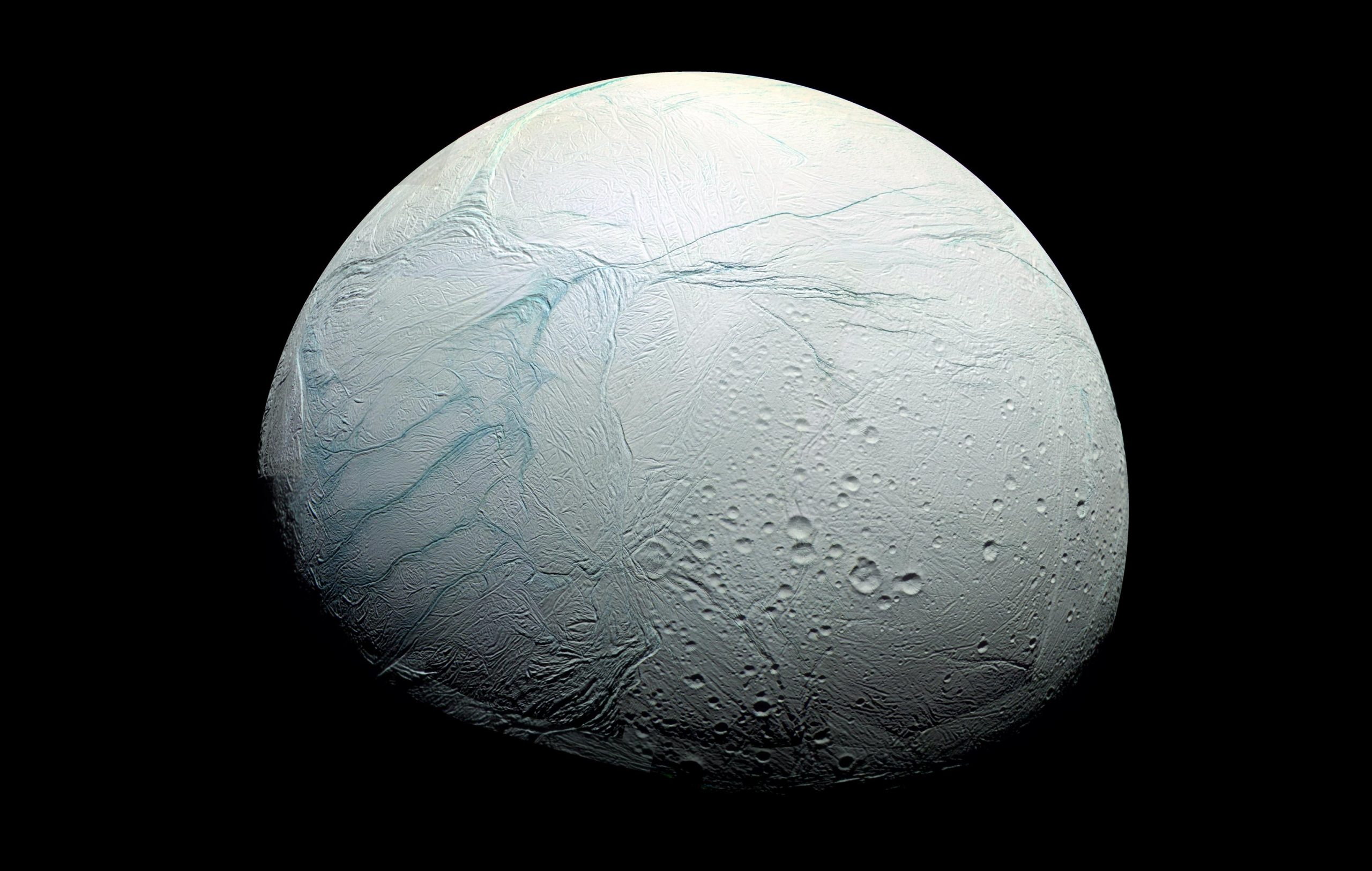
One of the most exciting discoveries was about Enceladus.
This icy moon shoots water vapor from its south pole into space. These geysers feed Saturn’s faint outer E-ring.
This discovery raised a major question:
Could Enceladus support life beneath its icy surface?
Scientists believe it may contain a hidden ocean under the ice.
🔷 Saturn’s Mysterious Hexagon Storm


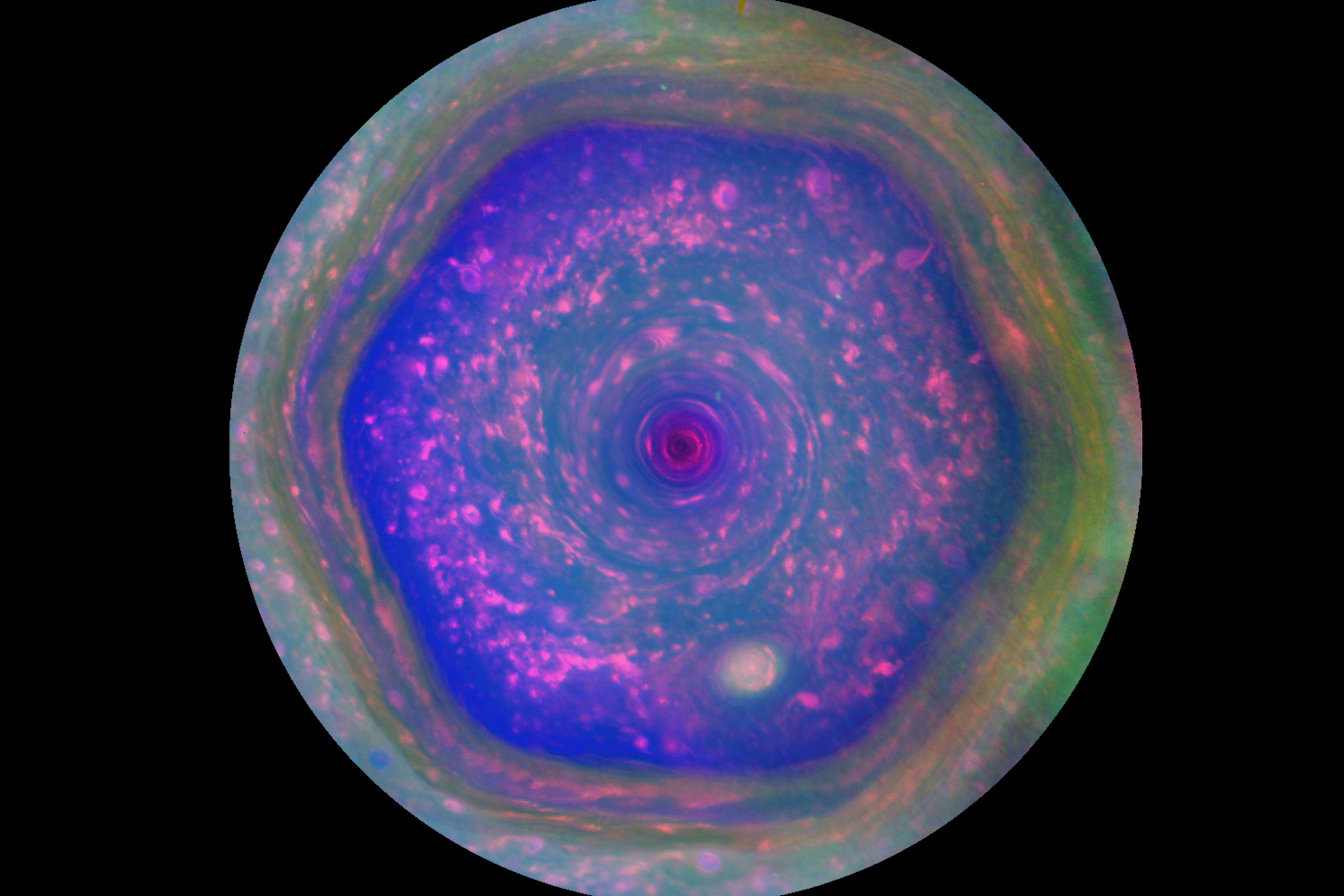
At Saturn’s north pole, there is a massive six-sided storm.
First noticed by Voyager 1, it was later studied in detail by Cassini.
Why Is It Strange?
- It forms a perfect hexagon shape.
- It is larger than Earth.
- It rotates constantly.
- Scientists cannot fully explain why it stays stable.
Laboratory experiments on Earth cannot recreate a long-lasting hexagon like Saturn’s.
🌡 Inside Saturn: Extreme Conditions
Saturn is mostly hydrogen and helium.
Inside the planet:
- Gas turns into liquid hydrogen.
- Pressure increases dramatically.
- Temperatures reach about 11,000°C.
- A rocky core may exist deep below.
Even though Saturn is light enough to float in water (in theory), its gravity is extremely powerful.
📊 Quick Comparison Table
| Feature | Saturn | Earth |
|---|---|---|
| Diameter | 116,460 km | 12,742 km |
| Wind Speed | 1,800 km/h | 400 km/h (max storms) |
| Rings | Yes | No |
| Main Composition | Hydrogen & Helium | Rock & Metal |
| Unique Feature | Hexagon Storm | Magnetic Field |
🎯 Conclusion: A Planet of Beauty and Mystery
Saturn is far more than a beautiful planet with rings.
It is a world shaped by destruction, powerful storms, disappearing rings, and fascinating moons like Enceladus.
Thanks to the Cassini mission, we now understand that:
- Saturn’s rings are temporary.
- Its atmosphere is violent and complex.
- Its moons may hold secrets of life.
The mystery is not over. Scientists continue studying Cassini’s data, and future missions may reveal even more.
🌌 The next time you look at Saturn through a telescope, remember — you are witnessing a temporary masterpiece of cosmic history.