
Artemis 2 Mission Explained: NASA Moon Journey
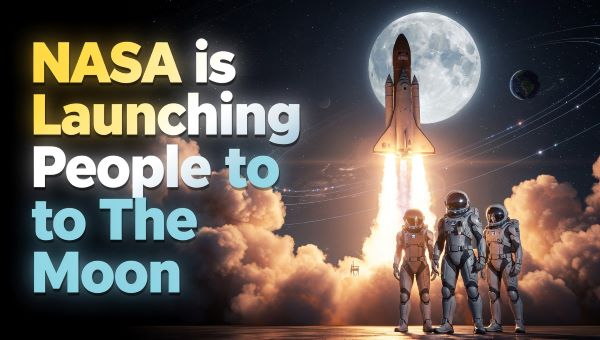
The Artemis 2 mission explained in simple English is one of the most exciting topics in modern space exploration. For the first time in over 50 years, humans are preparing to travel beyond low Earth orbit and return to the Moon.
Back in 1969, Neil Armstrong made history by stepping onto the Moon. Since then, space agencies like NASA have sent robots and probes across the solar system. But humans? We haven’t gone that far again—until now.
The Artemis 2 mission is not just about revisiting the Moon. It’s about building the future of human life in space.
🚀 What is Artemis 2 Mission?


The Artemis 2 mission is the first crewed mission of NASA’s Artemis program. It will send four astronauts on a journey around the Moon and back to Earth.
Key Facts:
- Distance: Over 400,000 km from Earth 🌍
- Duration: Around 10 days
- Goal: Test spacecraft systems with humans onboard
This mission is a test flight, but it is also a major step toward long-term human presence on the Moon.
👨🚀 Meet the Artemis 2 Astronauts
The crew represents experience, diversity, and global collaboration.
Crew Members:
- Reid Wiseman – Commander
- Victor Glover – Pilot
- Christina Koch – Mission Specialist
- Jeremy Hansen – Mission Specialist
Jeremy Hansen represents CSA, making this an international mission.
🛰️ Orion Spacecraft: The Future of Space Travel


The Orion spacecraft is the heart of Artemis 2.
Key Features:
- 60% more space than Apollo capsules
- Advanced life-support system
- Radiation protection
- Modern navigation technology
Interesting Additions:
- 🚽 Space toilet (much improved from Apollo days!)
- 💪 Exercise equipment to prevent muscle loss
- 📱 Personal devices like smartphones
According to NASA, astronauts lose 1–2% bone density per month in space, making exercise essential.
🚀 SLS Rocket: The Most Powerful Rocket Ever


The Space Launch System (SLS) is the rocket that will launch Artemis 2.
Why It’s Special:
- More powerful than Saturn V
- Uses advanced engines from Space Shuttle era
- Produces millions of pounds of thrust
At launch, the brightness is so intense that it can light up the sky like daytime.
🌌 Journey to the Moon: Step-by-Step
Phase 1: Launch
The rocket lifts off with massive power and enters Earth orbit.
Phase 2: System Check
Astronauts test:
- Life support systems
- Navigation controls
- Communication systems
Phase 3: Trans-Lunar Injection
The spacecraft fires engines to head toward the Moon.
Phase 4: Moon Flyby
The crew travels around the Moon without landing.
Phase 5: Return to Earth
Gravity helps bring the spacecraft back safely.
🌠 Challenges of Deep Space Travel


Unlike missions to the International Space Station, Artemis 2 goes beyond Earth’s protective shield.
Major Risks:
- ☢️ Cosmic radiation
- 🌞 Solar flares
- 🧠 Physical and mental stress
Research by ESA shows that deep space radiation is one of the biggest threats to astronauts.
Safety Measures:
- Radiation shelters inside spacecraft
- Wearable health monitoring devices
- Emergency protocols
🌕 Artemis vs Apollo: What’s Different?
| Feature | Apollo Missions | Artemis Missions |
|---|---|---|
| Era | 1960s–70s | Modern (2020s) |
| Technology | Basic | Advanced AI & systems |
| Crew Size | 3 astronauts | 4 astronauts |
| Goal | Moon landing | Long-term presence |
| Duration | Short missions | Long-term planning |
👉 Artemis is not just repeating history—it’s building the future.
🔥 The Most Dangerous Phase: Re-entry
When returning to Earth:
- Speed: ~40,000 km/h
- Temperature: ~2,760°C
The Orion capsule must survive extreme heat.
NASA successfully tested this during Artemis 1, proving its reliability.
🌍 Why Artemis 2 Mission Matters
This mission is bigger than just a Moon trip.
Long-Term Goals:
- Build Moon bases 🌕
- Prepare for Mars missions 🔴
- Advance human space exploration
According to NASA, the Artemis program aims to establish a sustainable human presence on the Moon by the 2030s.
❓ Frequently Asked Questions (FAQs)
1. What is the Artemis 2 mission? 🚀
The Artemis 2 mission is the first crewed mission of NASA’s Artemis program. It will send four astronauts around the Moon and back to Earth.
This mission is mainly a test flight to check if the Orion spacecraft and all systems work safely with humans onboard.
2. How far will Artemis 2 travel from Earth? 🌍
Artemis 2 astronauts will travel over 400,000 kilometers (about 248,000 miles) from Earth.
This is farther than any human has ever gone, even beyond the distance reached during the Apollo missions.
3. Will Artemis 2 land on the Moon? 🌕
No, Artemis 2 will not land on the Moon.
It will only orbit around the Moon and then return to Earth.
The actual Moon landing is planned for a future mission called Artemis 3.
4. Why is the Artemis 2 mission important? 🌌
Artemis 2 is important because it helps scientists and engineers:
- Test deep space travel with humans
- Study the effects of space on the human body
- Prepare for long-term Moon missions
- Plan future missions to Mars
According to NASA, this mission is a major step toward building a permanent human presence on the Moon.
5. What are the biggest risks in the Artemis 2 mission? ⚠️
Some of the main risks include:
- ☢️ Exposure to cosmic radiation
- 🔥 Extreme heat during re-entry
- 🚀 Rocket launch and system failures
To reduce these risks, NASA has designed advanced safety systems, including radiation protection, emergency abort systems, and tested heat shields.
🧾 Conclusion
The Artemis 2 mission explained in simple English shows us that humanity is entering a new era of exploration.
This mission is not just about going to the Moon again—it’s about staying there and going even further.
We are witnessing the beginning of a future where humans may live beyond Earth.
👉 If you love space and science, stay updated—because the next giant leap is happening right now.