
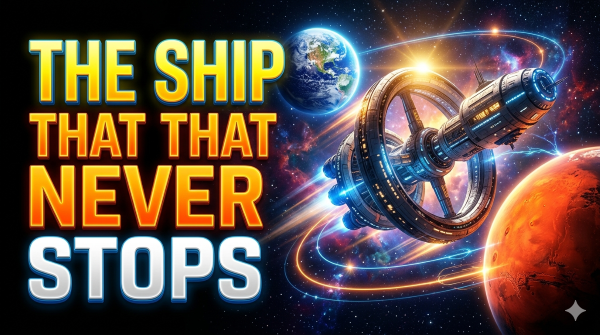
Permanent Earth to Mars Transport System
To establish a lasting human presence beyond Earth, scientists believe we will need a permanent Earth to Mars transport system capable of moving astronauts, equipment, and supplies between the two worlds on a regular basis.
A permanent Earth to Mars transport system could transform Mars exploration from occasional missions into a sustainable transportation network.
Instead of building a new spacecraft for every journey, future space agencies may rely on a permanent Earth to Mars transport system that operates continuously, reducing costs and improving efficiency.
Concepts such as the Aldrin Mars Cycler demonstrate how a permanent Earth to Mars transport system could provide reliable travel routes between Earth and Mars for decades.
Organizations like NASA and SpaceX are actively developing technologies that could support future Mars missions. As advancements in propulsion, life-support systems, and orbital mechanics continue, the vision of a permanent Earth to Mars transport system becomes increasingly realistic.
The Interplanetary Train to Mars That Never Stops Moving
Such a system could serve as the foundation for future Martian settlements, scientific research stations, and even interplanetary commerce.
Many experts believe that building a permanent Earth to Mars transport system will be one of the most important milestones in the history of human space exploration.
Just as railways connected distant cities on Earth, a permanent Earth to Mars transport system could eventually connect entire worlds, opening a new chapter in humanity’s expansion into the Solar System.
However, reaching Mars is only the first step. The bigger challenge is creating a reliable way to travel back and forth between Earth and Mars for decades or even centuries. This is where the concept of a permanent Earth to Mars transport system becomes incredibly important.
Imagine a giant spacecraft continuously traveling between Earth and Mars without ever stopping. Instead of building a new spacecraft for every mission, astronauts would simply board this space vessel as it passes by, much like boarding a train at a station.
This revolutionary concept is called the Aldrin Mars Cycler, and it could become the foundation of humanity’s future beyond Earth.
[INSERT IMAGE 1 HERE]
Alt Text: Aldrin Mars Cycler traveling between Earth and Mars
What Is the Aldrin Mars Cycler?
The Aldrin Mars Cycler is a proposed spacecraft designed to serve as a permanent Earth to Mars transport system. The idea was developed by Buzz Aldrin, the second person to walk on the Moon during the Apollo 11 mission.
Unlike traditional spacecraft that travel to Mars once and then require major refurbishment or replacement, the Cycler follows a repeating orbit around the Sun. It continuously passes near Earth and Mars on a predictable schedule.
Think of it as a permanent interplanetary cruise ship.
The Cycler itself never lands on either planet. Instead, smaller shuttle spacecraft transport passengers and cargo to and from the Cycler whenever it passes nearby.
This approach allows the expensive infrastructure of the spacecraft to remain in operation for many years.
Key Features of the Cycler
- Permanent operation in space
- Large living quarters for astronauts
- Radiation shielding
- Long-term life-support systems
- Reusable transportation infrastructure
- Reduced mission costs over time
Why Humanity Needs a Permanent Earth to Mars Transport System
One of the biggest challenges in space travel is transportation efficiency.
Every mission to Mars requires enormous amounts of fuel. Engineers must launch habitats, supplies, food, water, and life-support systems from Earth each time.
This process is expensive and limits how frequently humans can travel to Mars.
A permanent Earth to Mars transport system solves many of these challenges by keeping most of the infrastructure permanently in space.
Benefits include:
- Lower transportation costs
- Improved safety
- Greater passenger capacity
- Better radiation protection
- Regular transportation schedules
- Support for future Mars settlements
Just as railroads transformed nations on Earth, interplanetary transportation systems could transform the future of human civilization.
How the Aldrin Mars Cycler Works
The concept may sound complicated, but the basic idea is surprisingly simple.
Step 1: Launch the Cycler
A massive spacecraft is launched into a carefully designed orbit around the Sun.
Step 2: Establish a Repeating Orbit
The Cycler continuously travels between Earth and Mars, following the same path repeatedly.
Step 3: Shuttle Operations
Smaller spacecraft act as “space taxis.”
These vehicles transport astronauts and cargo:
- From Earth to the Cycler
- From the Cycler to Mars
- From Mars back to the Cycler
- From the Cycler back to Earth
Step 4: Continuous Service
The Cycler remains in operation for decades, creating a true permanent Earth to Mars transport system.
This dramatically reduces the need to build entirely new interplanetary spacecraft for every mission.
The Science Behind the Cycler
One reason the Aldrin Mars Cycler is so fascinating is that it relies on orbital mechanics rather than massive amounts of fuel.
Gravity Assists
The spacecraft uses planetary gravity to help maintain its trajectory.
This process, often called a gravity slingshot, allows spacecraft to gain momentum without consuming large amounts of fuel.
Benefits include:
- Reduced fuel consumption
- Increased efficiency
- Lower operating costs
- Long-term sustainability
In many ways, gravity becomes part of the transportation infrastructure itself.
Could This Be the First Interplanetary Highway?
Transportation infrastructure has always shaped civilization.
Throughout history, humans built:
- Roads
- Canals
- Railways
- Highways
- Airports
Each innovation connected people and accelerated growth.
A permanent Earth to Mars transport system could become humanity’s first true interplanetary highway.
Instead of rare and expensive missions, travel between Earth and Mars could eventually become routine.
Future generations might view travel to Mars much like international air travel today.
Engineering Challenges
Despite its promise, the Aldrin Mars Cycler faces several challenges.
Radiation Exposure
Deep space contains dangerous cosmic radiation.
Future Cyclers would require advanced shielding systems to protect passengers during long journeys.
Artificial Gravity
Living in zero gravity for extended periods can weaken bones and muscles.
Engineers may need rotating habitats that generate artificial gravity.
Precise Docking
Because the Cycler never completely stops, shuttle spacecraft must dock with incredible precision.
Construction Costs
Building a permanent Earth to Mars transport system would require significant investment and international cooperation.
Nevertheless, many experts believe the long-term benefits could justify these costs.
Comparison Table
| Feature | Traditional Mars Mission | Aldrin Mars Cycler |
|---|---|---|
| Reusability | Limited | High |
| Infrastructure | Temporary | Permanent |
| Passenger Capacity | Small | Large |
| Radiation Protection | Mission Specific | Long-Term |
| Cost Per Trip | Higher | Potentially Lower |
| Colonization Support | Limited | Excellent |
NASA, SpaceX, and the Future of Mars Travel
Today, NASA and SpaceX are focused on developing direct transportation systems for Mars missions.
However, as Mars settlements expand, transportation demands will increase dramatically.
Future Martian colonies may require:
- Passenger transportation
- Cargo logistics
- Medical support missions
- Scientific research transport
- Emergency evacuation systems
A permanent Earth to Mars transport system could eventually support all of these functions while creating a stable connection between two worlds.
Frequently Asked Questions (FAQs) About the Permanent Earth to Mars Transport System
1. What is a permanent Earth to Mars transport system?
A permanent Earth to Mars transport system is a long-term transportation network designed to regularly move people, cargo, and supplies between Earth and Mars. Unlike traditional Mars missions that require building new spacecraft for each journey, a permanent Earth to Mars transport system would use reusable infrastructure, making interplanetary travel more efficient and cost-effective.
2. How does the permanent Earth to Mars transport system work?
The concept of a permanent Earth to Mars transport system relies on spacecraft that continuously travel between Earth and Mars on predictable routes. One of the most famous examples is the Aldrin Mars Cycler, which follows a repeating orbit around the Sun. Smaller spacecraft can dock with this transport system to transfer astronauts and cargo between planets.
3. Why is a permanent Earth to Mars transport system important?
A permanent Earth to Mars transport system is important because it could reduce the cost of future Mars missions while increasing travel frequency. As human settlements on Mars grow, a reliable permanent Earth to Mars transport system will be essential for delivering food, equipment, scientific instruments, and new settlers.
4. Who proposed the idea of a permanent Earth to Mars transport system?
The most well-known concept for a permanent Earth to Mars transport system was proposed by astronaut Buzz Aldrin. His Aldrin Mars Cycler concept envisions a spacecraft that continuously cycles between Earth and Mars, creating a reusable transportation network for future space travelers.
5. Could a permanent Earth to Mars transport system make Mars colonization possible?
Yes. Many experts believe a permanent Earth to Mars transport system could play a major role in Mars colonization. By creating a dependable transportation network, the system would allow regular movement of people and resources, making long-term human settlements on Mars more practical and sustainable.
6. What are the main benefits of a permanent Earth to Mars transport system?
The main benefits of a permanent Earth to Mars transport system include:
- Reduced transportation costs
- Reusable spacecraft infrastructure
- Improved passenger safety
- Better radiation protection
- Increased cargo capacity
- Support for future Mars colonies
- More frequent travel opportunities
These advantages could make a permanent Earth to Mars transport system one of the most important technologies for future space exploration.
7. What challenges must be solved before building a permanent Earth to Mars transport system?
Building a permanent Earth to Mars transport system involves several major challenges, including radiation shielding, artificial gravity, life-support systems, spacecraft maintenance, and precise docking procedures. Engineers must also develop cost-effective methods to construct and operate such a large transportation network.
8. Could NASA and SpaceX develop a permanent Earth to Mars transport system?
Both NASA and SpaceX are working on technologies that could contribute to a future permanent Earth to Mars transport system. While current efforts focus on direct Mars missions, future advancements in reusable spacecraft, orbital infrastructure, and space habitats could eventually support a permanent transportation network between Earth and Mars.
9. How long would travel take using a permanent Earth to Mars transport system?
Travel time within a permanent Earth to Mars transport system would depend on orbital positions and spacecraft design. Most current Mars mission concepts require approximately six to nine months of travel. Future improvements in propulsion technology could potentially reduce these travel times.
10. Will the permanent Earth to Mars transport system become a reality?
Although a permanent Earth to Mars transport system does not exist today, many scientists and aerospace engineers believe it could become reality within the coming decades. As humanity moves toward becoming a multi-planet species, a permanent Earth to Mars transport system may eventually become as important to space travel as railways and highways are on Earth.
11. How would a permanent Earth to Mars transport system affect future generations?
A permanent Earth to Mars transport system could fundamentally change human civilization by connecting two planets through a reliable transportation network. Future generations may use a permanent Earth to Mars transport system for tourism, scientific research, trade, and even permanent relocation between Earth and Mars.
12. Is the Aldrin Mars Cycler the only permanent Earth to Mars transport system concept?
No. While the Aldrin Mars Cycler is one of the most famous examples, scientists have proposed several designs for a permanent Earth to Mars transport system. Future concepts may include advanced space stations, nuclear-powered spacecraft, and large interplanetary habitats designed to support regular travel throughout the Solar System.
Conclusion
The Aldrin Mars Cycler represents one of the most ambitious ideas ever proposed in space exploration. By creating a permanent Earth to Mars transport system, humanity could move beyond temporary missions and begin building a lasting civilization beyond Earth.
Although significant technical challenges remain, the concept offers a practical vision for the future. If humans truly plan to settle Mars, transportation infrastructure will be just as important as rockets and habitats.
The dream of a permanent bridge between Earth and Mars may seem futuristic today, but many of history’s greatest achievements once seemed impossible.
The Aldrin Mars Cycler could be the first step toward turning the Solar System into humanity’s next frontier.