
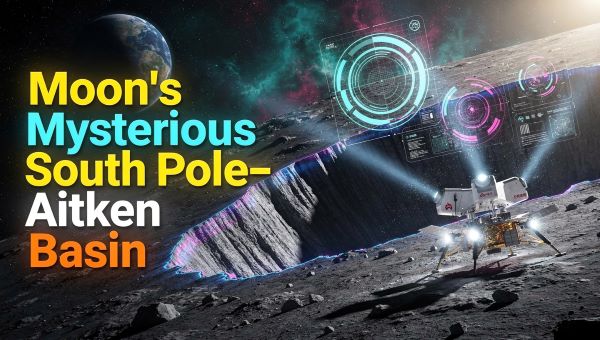
7 Powerful Facts About China AI Moon Landing Facts
The world is entering a new age of space exploration, and China is becoming one of the biggest names in the global Moon race. Over the past few years, China has launched several successful lunar missions that have attracted worldwide attention. China AI Moon Landing Facts are not only improving scientific research but also changing how humans may explore space in the future.
You can learn more about modern lunar exploration from the official NASA Moon Exploration Program and the latest updates on China’s space missions through the China National Space Administration (CNSA). Researchers can also explore detailed Moon science information from the European Space Agency Moon Exploration Page.
One of the most important achievements was China AI Moon Landing Facts at South Pole–Aitken Basin. This mission combined advanced artificial intelligence, robotic technology, autonomous spacecraft systems, and lunar exploration techniques to achieve something never done before.
China successfully landed a spacecraft on the far side of the Moon, collected valuable lunar samples, and safely returned them to Earth. This historic mission China AI Moon Landing Facts showed that modern AI systems are now capable of handling extremely dangerous operations in deep space without direct human control.
The mission also brought global attention to the mysterious South Pole–Aitken Basin, one of the oldest and largest impact craters in the entire solar system. Scientists believe this region may contain important clues about the Moon’s formation, volcanic history, and the early solar system.
In this detailed guide, we will explore everything about China AI Moon Landing Facts, the South Pole–Aitken Basin, future Moon base plans, and why this mission could shape humanity’s future beyond Earth.
China Just Explored the Moon’s Mysterious South Pole–Aitken Basin
What Is the South Pole–Aitken Basin?
The Moon’s Most Mysterious Giant Crater
The South Pole–Aitken Basin is one of the largest known impact craters in the solar system. It is located on the far side of the Moon, a region that never directly faces Earth.
This giant basin is approximately:
- 2,500 kilometers wide
- Up to 13 kilometers deep
- Billions of years old
Scientists believe it formed after a massive asteroid crashed into the Moon during the early history of the solar system.
The impact was so powerful that it may have exposed material hidden deep inside the Moon’s crust and mantle. Because of this, researchers consider the basin one of the most scientifically valuable locations on the Moon.


Why Scientists Are So Interested in the China AI Moon Landing Facts
Scientists have wanted to explore the South Pole–Aitken Basin for decades because it may help answer important questions such as:
- How was the Moon formed?
- Why are the Moon’s two sides different?
- Did ancient volcanic activity exist on the Moon?
- What was the early solar system like?
- What materials exist beneath the lunar crust?
The far side of the Moon looks very different compared to the near side visible from Earth. It contains rough terrain, thicker crust, and more impact craters.
Studying this area could improve our understanding of planetary science and space evolution.
China’s Chang’e 6 Moon Mission
A Historic Achievement in Space Exploration
China’s Chang’e 6 mission became one of the most advanced robotic lunar missions in modern history.
The mission had three major objectives:
- Land on the far side of the Moon
- Collect lunar samples
- Return the samples safely to Earth
Although this sounds simple, the mission was extremely complex.
The spacecraft included several important components:
- Orbiter
- Lander
- Ascender
- Return capsule
Each system needed to function perfectly for the mission to succeed.
Even a small failure could have destroyed the entire mission.


Why the Far Side of the Moon Is Difficult to Explore
Communication Challenges
One of the biggest problems with exploring the far side of the Moon is communication.
Normally, spacecraft communicate directly with Earth. However, the Moon blocks radio signals from reaching the far side.
This means mission controllers cannot manually guide the spacecraft during landing.
As a result, China needed highly advanced autonomous technology capable of making decisions independently.
This is where artificial intelligence became essential.
How AI Helped China Land on the Moon
China AI Moon Landing Facts
China’s spacecraft used advanced AI lunar landing technology to safely navigate dangerous terrain on the Moon.
The onboard AI systems could:
- Scan the lunar surface
- Detect hazardous rocks
- Avoid steep slopes
- Select safe landing zones
- Adjust landing speed automatically
The spacecraft made these decisions in real time while descending toward the lunar surface.
This autonomous navigation technology represents a major breakthrough in modern space exploration.


Why China AI Moon Landing Facts Are Important for Future Space Missions
Artificial intelligence is becoming increasingly important because communication delays make manual spacecraft control difficult.
Future missions to:
- Mars
- Deep space
- Asteroids
- Distant moons
will require spacecraft capable of independent decision-making.
China’s successful AI Moon landing proved that autonomous robotic exploration is becoming more reliable and advanced.
This technology may influence future missions by:
- NASA
- ESA
- SpaceX
- International lunar programs
Collecting Lunar Samples
Why Moon Rocks Are Valuable
After landing successfully, the Chang’e 6 spacecraft began collecting Moon soil and rock samples from the South Pole–Aitken Basin.
The mission gathered nearly 2 kilograms of lunar material.
These samples are extremely valuable because humans had never previously returned material from this region.
Scientists believe the samples may contain:
- Ancient volcanic material
- Deep lunar crust fragments
- Clues about lunar evolution
- Information about the early solar system
Could These Samples Rewrite Lunar History?
Some researchers believe the Moon’s far side preserved geological information lost on the near side billions of years ago.
The samples may help scientists understand:
- The Moon’s origin
- Planetary formation
- Ancient lunar volcanic activity
- Differences between lunar hemispheres
This could improve scientific understanding across planetary science and astronomy.
Pakistan’s CubeSat and International Cooperation
ICUBE-Q Mission
The Chang’e 6 mission also carried Pakistan’s first lunar CubeSat called ICUBE-Q.
This small satellite was designed to:
- Study the Moon
- Search for water ice
- Support lunar research
The mission showed how modern space exploration is becoming increasingly international.


Why International Space Cooperation Matters
Modern space missions are expensive and technologically challenging.
Countries now work together to:
- Share research
- Reduce mission costs
- Improve technology
- Increase scientific discoveries
Future Moon exploration projects may involve multiple countries building shared research stations on the lunar surface.
China’s Future Moon Missions
Chang’e 7 Mission
China’s next major lunar mission is Chang’e 7.
This mission will explore the Moon’s South Pole to search for frozen water inside permanently shadowed craters.
Why Water on the Moon Matters
Water is extremely important for future Moon missions because it can provide:
- Drinking water
- Oxygen
- Rocket fuel
This could help astronauts survive on the Moon for longer periods.
Chang’e 8 and Future Moon Bases
Building Structures with Lunar Soil
Chang’e 8 will focus on technologies needed for future Moon bases.
One exciting idea involves using 3D printing systems to create structures using lunar soil itself.
Future astronauts may eventually build:
- Lunar habitats
- Research labs
- Storage stations
- Radiation shelters
without transporting heavy building materials from Earth.


China’s Long-Term Lunar Vision
Preparing for Human Presence on the Moon
China is not simply planning short Moon visits.
The country hopes to establish a long-term lunar research station that may eventually support human settlements.
Possible future systems include:
- Human habitats
- Solar energy systems
- Resource extraction facilities
- Scientific laboratories
The Moon could also become a launch platform for future Mars missions.
China vs NASA: The New Moon Race
A Modern Space Competition
The world is now witnessing a new Moon race.
During the Cold War, the United States and the Soviet Union competed to reach the Moon first.
Today, China and NASA are leading a new era of lunar exploration.
Both countries are investing heavily in:
- Moon missions
- AI technology
- Human lunar programs
- Future Moon bases
Who Is Leading?
NASA still has decades of experience and advanced programs like Artemis.
However, China’s rapid progress has surprised many experts.
China has demonstrated:
- Reliable robotic missions
- Advanced autonomous systems
- Successful sample return missions
- Long-term lunar planning
The next decade may determine which nation becomes the dominant force in lunar exploration.


Challenges of Lunar Exploration
Space Is Extremely Dangerous
Despite recent successes, exploring the Moon remains very risky.
Major challenges include:
- Radiation exposure
- Extreme temperatures
- Dust contamination
- Communication delays
- Limited resources
Future Moon bases will require advanced engineering solutions and survival technologies.
The Future of AI in Space Exploration
Artificial intelligence will likely become even more important in future missions.
AI systems may eventually manage:
- Spacecraft repairs
- Autonomous navigation
- Robotic mining
- Habitat operations
- Scientific analysis
The success of China’s AI Moon landing demonstrates how rapidly these technologies are improving.
Why This Mission Matters for Humanity
China’s lunar mission is important not only for one country but for humanity as a whole.
The technologies developed for lunar exploration may eventually support future missions to:
- Mars
- Asteroids
- Deep space destinations
The Moon is becoming humanity’s testing ground for long-term space survival.
Comparison Table
| Feature | Chang’e 6 Mission | Traditional Moon Missions |
|---|---|---|
| Landing Area | Far Side of Moon | Near Side |
| AI Navigation | Advanced Autonomous AI | Limited Automation |
| Sample Return | Yes | Yes |
| Communication Difficulty | Very High | Moderate |
| Scientific Importance | Extremely High | High |
| Future Moon Base Support | Yes | Limited |
The mission combined artificial intelligence, autonomous spacecraft systems, robotics, and advanced lunar engineering to achieve something never done before.
By successfully landing on the far side of the Moon and returning valuable lunar samples, China demonstrated that the future of space exploration is rapidly evolving.
The South Pole–Aitken Basin may hold important clues about the Moon’s formation, ancient volcanic activity, and the history of the solar system.
At the same time, this mission showed how artificial intelligence is becoming essential for future exploration beyond Earth.
The new Moon race has already begun, and the coming decades may completely change humanity’s future in space.
The Moon is no longer just a bright object in the night sky.
It is becoming humanity’s next frontier.