
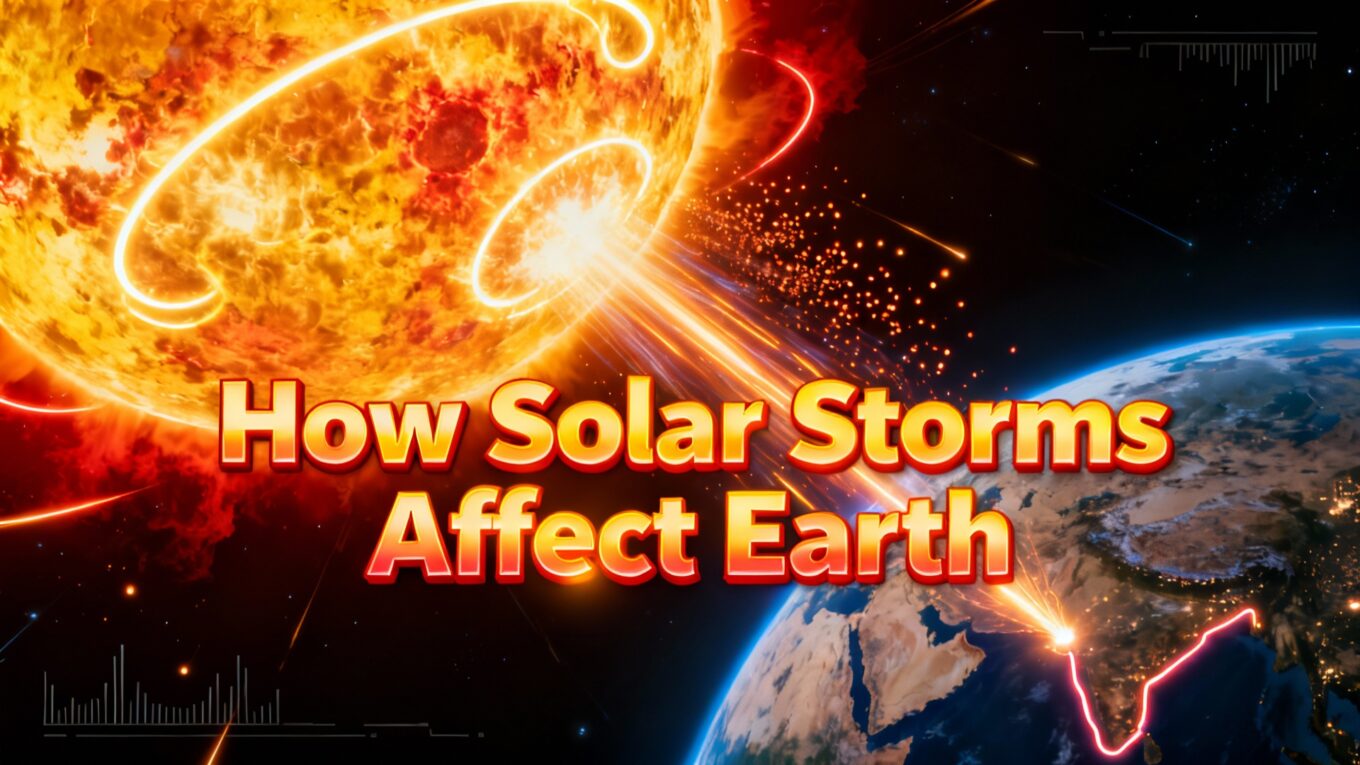
Solar Flares, CMEs & Why Solar Flares In 2026 Are Dangerous
As 2025 ending and 2016 approaches, scientists across the world are raising concerns about intense space weather events that may directly affect our modern technological world. The question many people are asking is simple yet urgent: why solar flares in 2026 are dangerous, and what can they do to daily life on Earth? With Solar Cycle 26 nearing its peak, experts believe the coming months could bring some of the strongest solar activity we have seen in decades.
To understand why these warnings matter, we need to explore what solar flares are, what CMEs do, and how these giant explosions from the Sun can disrupt our planet’s systems.
## Understanding Solar Flares: The Sun’s Explosive Outbursts
Solar flares are sudden, powerful bursts of radiation that erupt from the Sun’s surface. They are triggered by the sudden release of magnetic energy stored in the Sun’s atmosphere. When this happens, the Sun emits massive amounts of light, heat, and high-energy particles into space.
### There are three main things to know about solar flares:
* They travel fast: Radiation from a solar flare can reach Earth in just 8 minutes.
* They disrupt communication: High-frequency radio signals and GPS systems are highly sensitive to solar flare radiation.
* They come with warning signs: Dark sunspots and magnetic build-up on the Sun often signal an upcoming flare.
Solar flares alone can cause problems, but the real concern comes when they are accompanied by another giant solar event: a Coronal Mass Ejection (CME).
## What Are CMEs and why solar flares in 2026 are dangerous?
A Coronal Mass Ejection is a massive bubble of charged particles and magnetic field that erupts from the Sun at speeds up to millions of kilometers per hour. Unlike solar flares, which contain radiation, CMEs carry real physical material—plasma—from the Sun.
### When a CME hits Earth, it can trigger:
* Strong geomagnetic storms
* Damage to power grids
* Disruption of satellite navigation
* Problems in aviation communication
* Increased radiation exposure for astronauts
This combination of solar flares and CMEs is why space agencies call 2025 a “high-risk year” for technology.
# Why Scientists Are Worried About Solar Cycle 26
The Sun follows an 11-year cycle of rising and falling activity. Right now, we are in Solar Cycle 26, which scientists predict will reach its maximum around the year 2025.
### Key Solar Cycle 25 predictions that cause concern:
* A higher number of large sunspots
* Stronger-than-expected solar flares
* Frequent and powerful CMEs
* Increased risk of geomagnetic storms hitting Earth
Earlier cycles have caused noticeable impacts on Earth, but modern society is more vulnerable than ever because we depend heavily on technology for everything—navigation, communication, electricity, transportation, and security systems.
This means solar storm risks for Earth in 2026 could be more serious than in any previous solar cycle.
# How Solar Storms Can Affect Everyday Life
Solar storms might sound like something far away in space, but their effects can be surprisingly close to home.
## 1. Impact on Satellites
Satellites are essential for GPS, weather forecasting, internet connectivity, and communication. When CMEs hit Earth, the excess charged particles can interfere with satellite electronics and push them out of orbit.
This fulfills the secondary keyword: how CMEs affect satellites.
## 2. Impact on Power Grids
A strong geomagnetic storm can overload power lines and transformers. This is exactly what happened in 1989 when a severe CME knocked out power across Quebec, leaving millions in the dark.
Today, with larger grids and heavier loads, geomagnetic storm impact on technology is even more significant.
Airplanes flying over polar regions depend on GPS and high-frequency radio signals, both of which are sensitive to solar flares. During strong events, airlines may need to reroute flights, increasing travel time and cost.
Navigation systems used by ships, drones, and emergency services can also become inaccurate during extreme space weather.
## 4. Impact on Astronauts and Space Missions
Astronauts outside Earth’s protective magnetic field face increased radiation exposure during solar storms. This is extremely important for future Moon and Mars missions as well as astronauts on the International Space Station.
# Historic Solar Storms Scientists Want to Avoid
When experts talk about solar risks, they often refer to a famous event:
### The Carrington Event of 1859
The strongest recorded geomagnetic storm in history. It caused telegraph systems to burst into flames, created auroras seen near the equator, and would cause catastrophic technological damage if it happened today.
Modern scientists are concerned that space weather warnings 2025 may resemble early signs of such extreme events.
# Are We Prepared for a Major Solar Event?
Agencies like NASA, NOAA, ISRO, and ESA constantly monitor the Sun using satellites and telescopes. They provide early warnings when they detect dangerous flares or CMEs heading toward Earth.
### Steps being taken include:
* Solar weather alerts
* Grid protection guidelines
* Satellite safe mode protocols
* Radiation advisories for airlines
* Space mission scheduling adjustments
However, preparation doesn’t guarantee safety. The Sun is unpredictable, and a strong enough solar storm could still cause widespread disruptions.
# Conclusion: Should We Be Worried About 2026?
Scientists are not predicting the end of the world, but they are warning that 2025 will be a year of intense solar activity. With Solar Cycle 26 reaching its peak, the risks from solar flares and CMEs are higher than usual. Understanding why solar flares in 2026 are dangerous helps us appreciate why space agencies are preparing so seriously.
The more we know, the better we can protect our technology, infrastructure, and daily lives from the power of the Sun.